The Science of Longevity: How Much Exercise You Actually Need at Every Stage of Life
The Science of Longevity
Physical activity is not a “one size fits all” prescription. A high-intensity interval training (HIIT) session that energizes a 25-year-old could potentially lead to injury for a 70-year-old, while the light walking suitable for a senior might not provide enough metabolic stimulus for a teenager.
Understanding the precise volume and type of exercise required for your specific age group is the key to optimizing heart health, maintaining cognitive function, and extending your “healthspan.” Here is the definitive breakdown of how to structure your weekly movement based on your biological age.
The Universal Baseline: Why Age Dictates Intensity
As we age, our physiological needs shift. In youth, exercise is focused on bone density and motor skills. In middle age, the priority shifts to metabolic health and stress management. In later years, the focus becomes sarcopenia (muscle loss) prevention and balance.
Following the global standards set by health organizations, but tailored for real-world application, here is how many days you should be active.
Children and Adolescents (Ages 5–17): Building the Foundation
For youth, exercise is not just about fitness; it is about developmental biology. This is the critical window for building bone mineral density that must last a lifetime.
- Frequency: 7 days per week.
- Duration: At least 60 minutes of moderate-to-vigorous activity daily.
- The Breakdown:
- Aerobic: Most of the 60 minutes should be aerobic (running, swimming, soccer).
- Muscle Strengthening: At least 3 days a week should include activities like gymnastics or climbing.
- Bone Strengthening: Impact activities like jumping rope or basketball are essential 3 times a week to “bank” bone density.
Young Adults (Ages 18–39): Maximizing Peak Physiological Capacity
In this stage, your body recovers faster than at any other time. This is the decade to build a high level of cardiovascular fitness and peak muscle mass.
- Frequency: 5 to 6 days per week.
- Target: 150–300 minutes of moderate aerobic activity OR 75–150 minutes of vigorous activity.
- The Strategy:
- Prioritize Resistance: Lift weights at least 3 days a week. Strength built now protects joints in the future.
- The Metabolic Boost: Incorporate HIIT once or twice a week to maximize VO2 max, which is a leading predictor of longevity.
- Active Recovery: Use 1–2 days for low-impact movement like yoga or steady-state walking.
Middle Adulthood (Ages 40–64): Preserving Metabolism and Hormonal Health
This is the “maintenance and protection” phase. Metabolism naturally slows, and hormonal shifts (like perimenopause or declining testosterone) begin to impact body composition.
- Frequency: 4 to 5 days per week.
- The Strategic Shift:
- Resistance Training is Non-Negotiable: To combat the natural decline in muscle mass, strength training 2–3 times a week is mandatory.
- Zone 2 Training: Focus on “steady-state” cardio (where you can still hold a conversation) for 45 minutes, 3 times a week, to maintain mitochondrial health.
- Flexibility and Mobility: Dedicate at least 10 minutes a day to mobility work to prevent the “stiffness” often associated with aging.
Seniors (Ages 65 and Above): Functionality and Independence
For older adults, the goal of exercise shifts toward maintaining independence, preventing falls, and preserving cognitive function.
- Frequency: 3 to 5 days per week.
- The Essential Components:
- Multicomponent Training: The most effective routine includes a mix of functional strength, balance, and aerobic work in the same session.
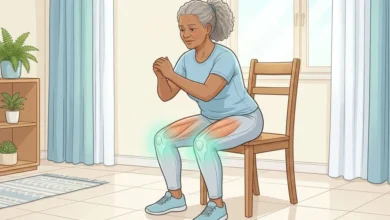
- Focus on the Lower Body: Strength in the legs is the best defense against falls. Exercises like chair squats and lunges are vital.
- Balance Work: Drills that challenge stability (like Tai Chi or standing on one leg) should be done 3 times a week.
- Cognitive Loading: Activities that require coordination, such as dance or doubles tennis, help keep the brain sharp.
Decoding Intensity: Moderate vs. Vigorous
How do you know if you are working hard enough? Use the “Talk Test”:
- Moderate Intensity: You can talk but not sing (e.g., brisk walking, light cycling).
- Vigorous Intensity: You can only say a few words before pausing for breath (e.g., running, heavy lifting, fast swimming).
The Dangers of “Under-Exercising” vs. “Over-Exercising”
While the risks of a sedentary lifestyle are well-documented (heart disease, diabetes, obesity), over-exercising can be equally detrimental as we age. Overtraining leads to chronic systemic inflammation and cortisol spikes.
The “Sweet Spot” involves listening to HRV (Heart Rate Variability) and ensuring that for every high-intensity day, there is a lower-intensity day to allow for cellular repair.
Practical Steps to Start Based on Your Age
- Audit Your Current Output: Use a wearable or a simple journal to track your active minutes for one week.
- Identify the Gap: Are you a 45-year-old doing only cardio? Add two days of strength. Are you a 20-year-old only lifting weights? Add two days of zone 2 cardio.
- The “Plus One” Rule: If you are currently sedentary, do not jump to 5 days a week. Start with one more day than you do now, and increase every two weeks until you hit your age-specific target.
Summary Checklist for Weekly Activity
- 5-17 Years: 60 mins daily + 3 days of bone/muscle building.
- 18-64 Years: 150-300 mins moderate cardio + 2 days of strength.
- 65+ Years: 150 mins moderate cardio + balance and strength work 3 times a week.

Hello! My name is Alan Teixeira and I am passionate about helping people live healthier, more balanced lives. From mindful eating to daily habits that promote physical and mental well-being, I believe that small, consistent changes can lead to powerful transformations.
I created this blog to share practical tips, reliable information, and thoughtful insights that can inspire you to take better care of yourself—with balance, mindfulness, and positivity.
If you are looking to improve your health, nourish your body, and build a lighter, more fulfilling routine, you are in the right place. Welcome!