Reclaim Your Vitality With These Targeted Strength Exercises for Women Over 50
strength-exercises-women-over-50-legs-lower-back
Maintaining a strong physical foundation becomes a non-negotiable priority as we cross the threshold of fifty years. Scientific research confirms that muscle mass naturally declines with age, yet this process is entirely reversible through consistent, targeted movement. By prioritizing the health of your legs and lower back, you safeguard your independence and enhance your daily quality of life.
The synergy between a stable lumbar spine and powerful lower limbs creates a biological shield against common age-related injuries. Strengthening these specific muscle groups does more than just tone your body; it actively protects your joints and improves overall metabolic health. You deserve to feel confident, capable, and pain-free while navigating the activities you love most.
Implementing a strategic routine does not require hours in a commercial gym or expensive high-tech equipment. This focused approach utilizes functional movements that stabilize the core and build endurance in the quadriceps and glutes. Let’s explore the most effective ways to fortify your body and reclaim the youthful energy that comes from physical resilience.
Why Leg and Lumbar Strength is the Secret to Longevity
For women over 50, physical strength is the most reliable predictor of long-term mobility. The lower back acts as the bridge between the upper and lower body, while the legs serve as the engine for movement. When these systems are weak, the body compensates by putting undue stress on the knees and cervical spine, leading to chronic pain and a sedentary lifestyle.
Combatting Sarcopenia and Bone Density Loss
Post-menopausal hormonal shifts can accelerate the loss of muscle tissue (sarcopenia) and the thinning of bones (osteoporosis). Resistance training creates mechanical tension that signals the body to deposit minerals into the skeletal structure. By engaging in leg-focused exercises, you are essentially “armoring” your bones against fractures.
Enhancing Proprioception and Balance
Falls are a leading cause of injury in later life, often stemming from a lack of proprioceptive awareness. Building strength in the calves, thighs, and spinal stabilizers improves your brain’s ability to sense your body’s position in space. This heightened balance acts as an internal safety net, keeping you steady on uneven surfaces.
Key Exercises for a Resilient Lower Back
A healthy lumbar region isn’t just about the back muscles; it’s about the entire “posterior chain.” These movements focus on decompression and stabilization.
The Modified Bird-Dog
This exercise is a powerhouse for spinal stability without placing heavy loads on the vertebrae.
- The Move: Start on all fours with a neutral spine. Simultaneously extend your right arm forward and your left leg back.
- The Benefit: It engages the multifidus muscles, which are the small, deep stabilizers that run along your spine.
Pelvic Tilts and Bridges
Glute strength is the best friend of a healthy lower back.
- The Move: Lie on your back with knees bent and feet flat. Lift your hips toward the ceiling while squeezing your glutes at the top.
- The Benefit: By strengthening the gluteus maximus, you take the “workload” off your lower back during walking and standing.
Building Powerful Legs Without Joint Strain
Many women over 50 avoid leg exercises due to knee discomfort, but the right movements actually alleviate joint pain by strengthening the supporting musculature.
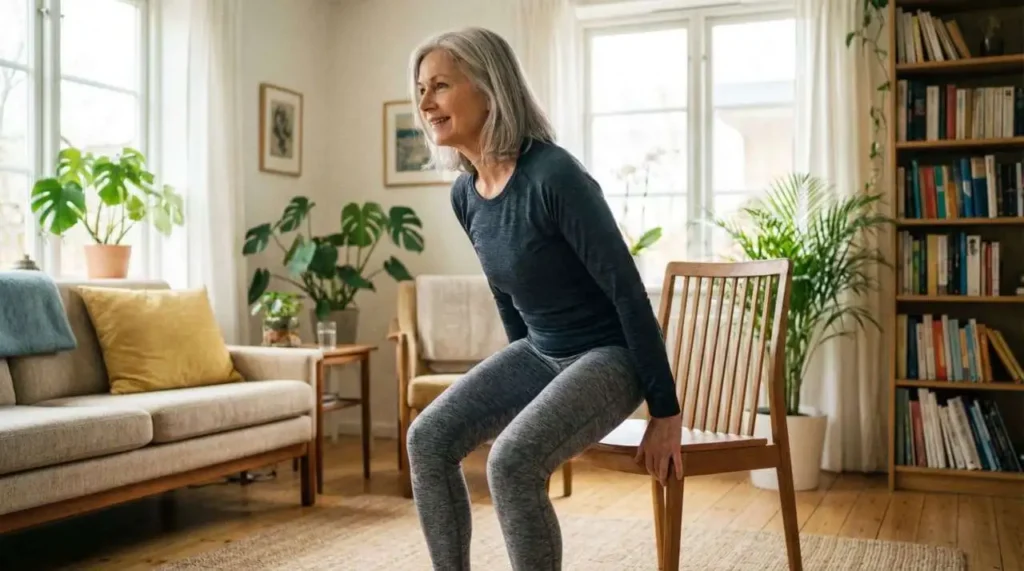
The Box Squat
Traditional squats can be intimidating, but the box squat adds a layer of safety and correct form.
- How to do it: Use a sturdy chair or bench. Lower your hips until you lightly touch the seat, then drive through your heels to stand back up.
- Why it works: It teaches the body to “hinge” at the hips rather than pushing the knees forward, preserving the cartilage in the knee joint.
Lateral Leg Lifts
Side-to-side movement is often neglected in daily life, leading to weak hip abductors.
- How to do it: While standing or lying on your side, lift your leg out to the side while keeping your toes pointed forward.
- Why it works: Strengthening the hips stabilizes the pelvis, which directly prevents the “wobble” that often leads to lower back strains.
The Role of Flexibility and Active Recovery
Strength is only one side of the coin; suppleness is the other. As we age, tendons and ligaments lose some of their elasticity, making a dedicated stretching routine essential.
- Pigeon Pose (Modified): Use a chair to stretch the hip flexors and piriformis, which frequently contribute to sciatica symptoms if too tight.
- Cat-Cow Stretch: Moving the spine through its full range of motion helps distribute synovial fluid, which lubricates the spinal discs.
- Hydration and Protein: Ensure you are consuming adequate protein (aiming for 25–30 grams per meal) to provide the building blocks for the muscle repair you are stimulating.
Creating a Sustainable Routine
Consistency outperforms intensity every time. For women over 50, the goal is not to train like an Olympic athlete but to create a sustainable rhythm that the body can recover from.
- Frequency: Aim for 2 to 3 sessions per week to allow 48 hours of recovery between workouts.
- Progression: Start with bodyweight movements. Once you can perform 15 repetitions with perfect form, consider adding light handheld weights or resistance bands.
- Listen to Your Body: Distinguish between “good” muscle soreness and “bad” joint pain. If a movement causes sharp pain, stop and adjust your range of motion.

Hello! My name is Alan Teixeira and I am passionate about helping people live healthier, more balanced lives. From mindful eating to daily habits that promote physical and mental well-being, I believe that small, consistent changes can lead to powerful transformations.
I created this blog to share practical tips, reliable information, and thoughtful insights that can inspire you to take better care of yourself—with balance, mindfulness, and positivity.
If you are looking to improve your health, nourish your body, and build a lighter, more fulfilling routine, you are in the right place. Welcome!