Core Is More Than Abs: Essential Exercises to Build a Strong Center
core strengthening exercises
A solid routine of core strengthening exercises goes far beyond traditional abdominal movements. The core includes muscles responsible for stabilizing the spine, supporting posture and connecting upper and lower body movements. Training this region properly improves balance, strength and movement efficiency.
Many people associate core training only with aesthetics, but its main function is stability. A strong core protects the lower back, improves coordination and allows better performance in daily activities and workouts.
When the right exercises are chosen, deep stabilizing muscles are activated along with the superficial ones. This integrated work results in safer movements, reduced injury risk and better functional strength.

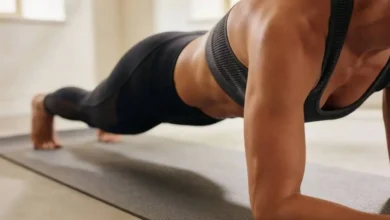
Plank and total core activation
The plank is one of the most effective exercises for strengthening the core because it requires the body to remain stable against gravity. During the movement, abdominal muscles, lower back, shoulders and glutes work together to maintain alignment.
Holding the plank improves endurance and spinal stability, making it a fundamental exercise for both beginners and advanced trainees.
Squats and core engagement
Although commonly seen as a leg exercise, squats demand strong core activation to keep the torso upright. The abdominal and lower back muscles stabilize the spine while the movement is performed.
This constant stabilization turns squats into an excellent functional exercise for strengthening the core indirectly.
Deadlifts for deep stabilization
Deadlifts require precise control of the trunk to keep the spine neutral during the lift. This makes the exercise highly effective for activating deep core muscles.
By maintaining proper posture, the core works continuously to support the load and protect the lower back.
Lunges and balance control
Lunges challenge the core because they are performed one leg at a time. This unilateral movement forces the body to resist rotation and maintain balance.
As a result, the abdominal muscles are activated to stabilize the pelvis and torso throughout the exercise.
Anti-rotation exercises
Anti-rotation movements train the core to resist twisting forces. These exercises strengthen the oblique muscles and deep stabilizers responsible for spinal protection.
They are especially important for improving functional strength used in everyday movements.
How to combine core exercises effectively
A balanced core routine should include static holds, dynamic movements and anti-rotation exercises. This combination ensures that all core muscles are trained efficiently.
Focusing only on crunches limits results and does not provide full stabilization benefits.
Benefits beyond appearance
Strengthening the core improves posture, reduces lower back discomfort and enhances athletic performance. It also supports safer movement patterns in daily life.
A strong core is essential for overall body function, not just visual definition.
Conclusion
Core training is about stability, strength and control rather than aesthetics alone. Exercises like planks, squats, deadlifts, lunges and anti-rotation movements work together to build a resilient and functional center. Incorporating these exercises into a regular routine improves posture, reduces injury risk and boosts overall physical performance.

Hello! My name is Alan Teixeira and I am passionate about helping people live healthier, more balanced lives. From mindful eating to daily habits that promote physical and mental well-being, I believe that small, consistent changes can lead to powerful transformations.
I created this blog to share practical tips, reliable information, and thoughtful insights that can inspire you to take better care of yourself—with balance, mindfulness, and positivity.
If you are looking to improve your health, nourish your body, and build a lighter, more fulfilling routine, you are in the right place. Welcome!